What Is a Dental AI Receptionist?
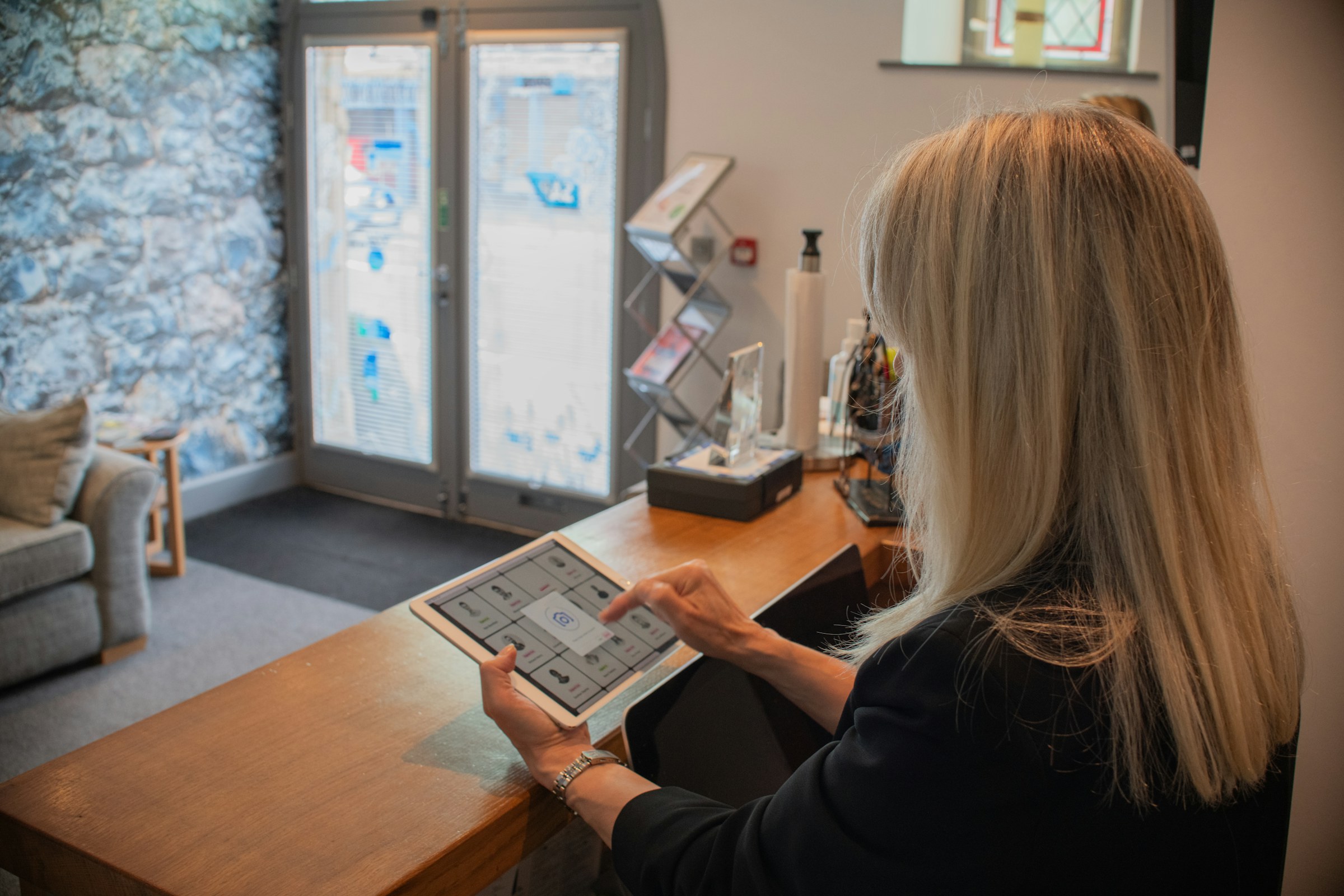
A dental AI receptionist is software that answers your practice's phone with a natural-sounding voice, talks to patients the way your front desk would, and books appointments straight into your schedule. Here's how it works and what to look for.
What it actually does
At its simplest, an AI receptionist (sometimes called an AI voice agent) picks up when your team can't. A good one does more than take a message:
- Answers calls 24/7, including lunch, after hours and the moments when every line is ringing.
- Recognizes existing patients and creates new patient records without duplicates.
- Books, reschedules and confirms appointments directly in your practice management system (PMS), following your rules for providers, operatories and appointment types.
- Asks your screening questions, such as insurance, reason for visit and whether it's an emergency.
- Hands off to a person when a caller asks for one, ideally with a short summary so the patient doesn't have to repeat themselves.
- Calls and texts patients for recalls, confirmations and reactivations.
Why practices are adopting them now
Two things have changed. First, patients expect to book on their own schedule. In a Phreesia survey of more than 4,000 patients, 84% said they would likely book a visit online if given the option, and 82% would reschedule online.1 A voice agent gives callers that same instant, any-time booking, without forcing them onto a website.
Second, staffing is hard. The ADA's Health Policy Institute reports that staffing is among dentists' top expected challenges for 2026.2 A front desk that's short one person feels it most on the phones. The U.S. Bureau of Labor Statistics puts the median receptionist wage at $37,230 a year, and that doesn't include benefits, training or the cost of replacing someone who leaves.3 An AI receptionist doesn't replace your team. It covers the hours and the call volume they can't.
AI receptionist vs. answering service vs. voicemail
Voicemail is free, but many callers won't leave a message, and new patients often book elsewhere before you call back.
A traditional answering service gets a human on the line, but usually takes a message rather than booking, because the operator can't see your schedule. Your team still has to call everyone back the next morning.
An AI receptionist answers instantly, any number of calls at once, and can book the appointment while the patient is still on the phone, as long as it's properly connected to your PMS.
Questions to ask before you choose one
- Does it book directly into my PMS, or does it create a task for my team? Ask which systems it supports. Dentrix, Open Dental and Eaglesoft are the most common.
- Does it follow my scheduling rules? Provider restrictions, operatory blocks, appointment lengths and new-patient slots are where general-purpose AI tools usually fall down.
- Can it book a whole family in one call?
- Will you sign a BAA? Any vendor handling patient information should sign a Business Associate Agreement under HIPAA.
- How does it hand calls to my team, and what happens in an emergency?
- How is it priced? Per minute, per call, or a flat monthly fee? Per-minute pricing can spike in your busiest months.
- Can I listen to the calls? Recordings and transcripts are the best way to judge quality.
The fastest test is a live demo against your real schedule. Call it yourself, try to book a family, and ask for something awkward.